The Strike That Shook America
In 1934, during the depths of the Great Depression, workers at the Electric Auto-Lite Company in Toledo, Ohio began what would become one of the most significant labor disputes in American history—yet one that is often overlooked in mainstream historical accounts.
Auto-Lite workers, facing wage cuts and dangerous working conditions, demanded recognition of their union, improved safety measures, and fair compensation. When management refused, approximately 400 workers walked out on February 23, 1934.
What began as a local labor dispute would eventually involve thousands of workers and community members, leading to violent confrontations with the Ohio National Guard, and ultimately changing the landscape of American labor relations.
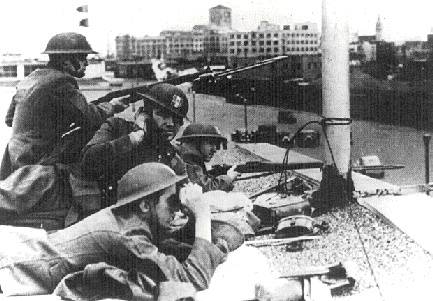
National Guard troops deployed during the 1934 Auto-Lite strike
Strike Timeline
THE TOLEDO TIMES
CHRONICLING THE HISTORIC AUTO-LITE STRIKE OF 1934
Initial Walkout
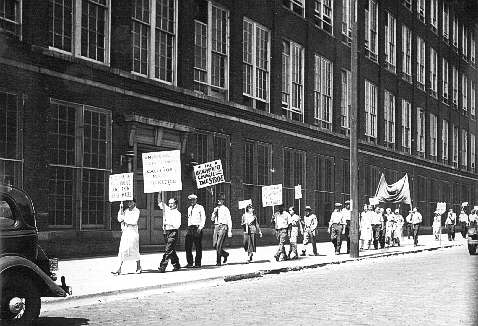
Auto-Lite workers walk off the job demanding union recognition, wage increases, and improved working conditions. Approximately 400 workers participate in the initial strike action, setting the stage for one of the most significant labor disputes in American history.
Injunction Issued
Lucas County Court issues injunction limiting picketers to 25 at each factory gate. This controversial ruling is seen as an attempt to weaken the strike by preventing mass demonstrations and effectively limiting workers' ability to disrupt factory operations.
Mass Picketing Begins
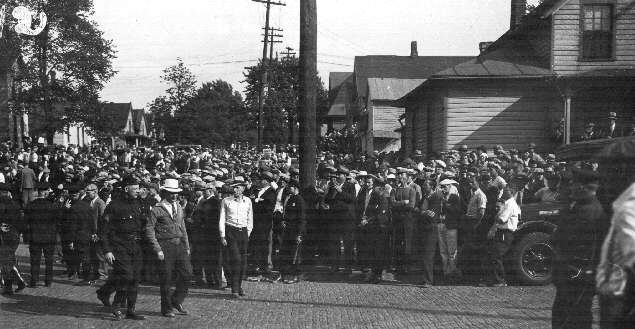
Led by the Lucas County Unemployed League, thousands of unemployed workers join picket lines in direct violation of the injunction. This show of solidarity between employed and unemployed workers represents a turning point in American labor organizing tactics.
"Battle of Toledo"
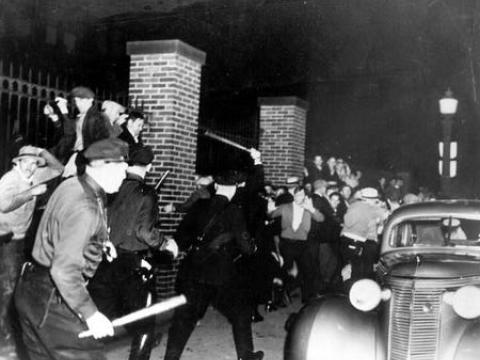
Violence erupts as the Ohio National Guard fires tear gas into the crowd of 10,000 protestors. Strikers respond by throwing bricks and bottles. The confrontation escalates throughout the day, marking the beginning of what would become known as the "Battle of Toledo."
The Turning Point
National Guardsmen open fire on the crowd, killing two protestors and injuring dozens. This shocking violence draws national attention to Toledo and galvanizes public support for the strikers. The deaths of Frank Hubay and Steve Cyigon become powerful symbols of the workers' struggle.
Strike Resolution
Auto-Lite management finally agrees to recognize the union, increase wages by 5%, and implement a seniority system for rehiring striking workers. This victory becomes a pivotal moment in American labor history and helps pave the way for broader unionization in the automotive industry.
Images from the Strike
Historical Impact
Labor Movement
The Auto-Lite strike became a pivotal moment in American labor history, demonstrating the power of solidarity between employed and unemployed workers. It helped pave the way for the passage of the National Labor Relations Act (Wagner Act) in 1935, which guaranteed workers the right to organize and collectively bargain.
The involvement of the Lucas County Unemployed League, an affiliate of the American Workers Party, showed how community support could strengthen labor actions.
Legacy
Despite its significance, the Toledo Auto-Lite strike is often overshadowed in historical accounts by other labor conflicts of the era. Yet its impact on labor law, community organizing tactics, and industrial relations continues to resonate today.
The strike's success helped fuel the growth of industrial unionism in the United States, particularly in the automotive industry, setting the stage for decades of improved working conditions and wages for American workers.
Key Figures

A.J. Muste
Leader of the American Workers Party who helped organize and coordinate strike efforts.

Ted Selander
Local leader of the Auto Workers Union who played a crucial role in mobilizing workers.

Charles Phelps Taft
The mediator appointed by Ohio Governor George White who helped broker the final settlement.
Sources & Further Reading
Primary Sources
-
Korth, Philip A. and Beegle, Margaret. "I Remember Like Today: The Auto-Lite Strike of 1934." Michigan State University Press, 1988.
A comprehensive historical account featuring oral histories from strike participants.
-
Morris, James. "The Road to Recognition: A History of the Congress of Industrial Organizations." New York: Random House, 1963.
Detailed examination of the CIO's development, including the role of the Auto-Lite strike.
-
Fine, Sidney. "The Automobile Under the Blue Eagle: Labor, Management, and the Automobile Manufacturing Code." University of Michigan Press, 1963.
Analysis of auto industry labor relations during the National Recovery Administration period.
Digital Archives
-
Toledo Public Library, "Auto-Lite Strike Collection." Digital archive of photographs, newspaper clippings, and oral histories.
Available at: Toledo Library Historical Archives
-
Ohio History Connection, "Labor in Ohio: The Auto-Lite Strike." Online exhibit featuring artifacts and documents from the strike.
Available at: Ohio History Connection